
June 11, 2026
If you have ever driven through Pacific Palisades and felt like the homes change personality from one street to the next, you are not imagining it. This is not a one-style neighborhood, and that is part of what makes it so compelling for buyers and sellers alike. Understanding the architectural styles that shape Pacific Palisades can help you read the market more clearly, recognize what gives each area its character, and better understand how a home’s design connects to its setting. Let’s dive in.
Pacific Palisades is best understood as a hillside-and-canyon residential area shaped by major development waves in the 1920s and again after World War II. According to city survey work, its mesas, bluffs, and canyons helped create distinct neighborhoods with recurring architectural styles, including Spanish Colonial Revival, other Period Revival forms, Ranch homes, and modern architecture.
That matters because style here is not just cosmetic. In the Palisades, architecture and topography work together. A home’s form often reflects whether it sits on a bluff, within a canyon, or on a mesa with broader streets and flatter lots.
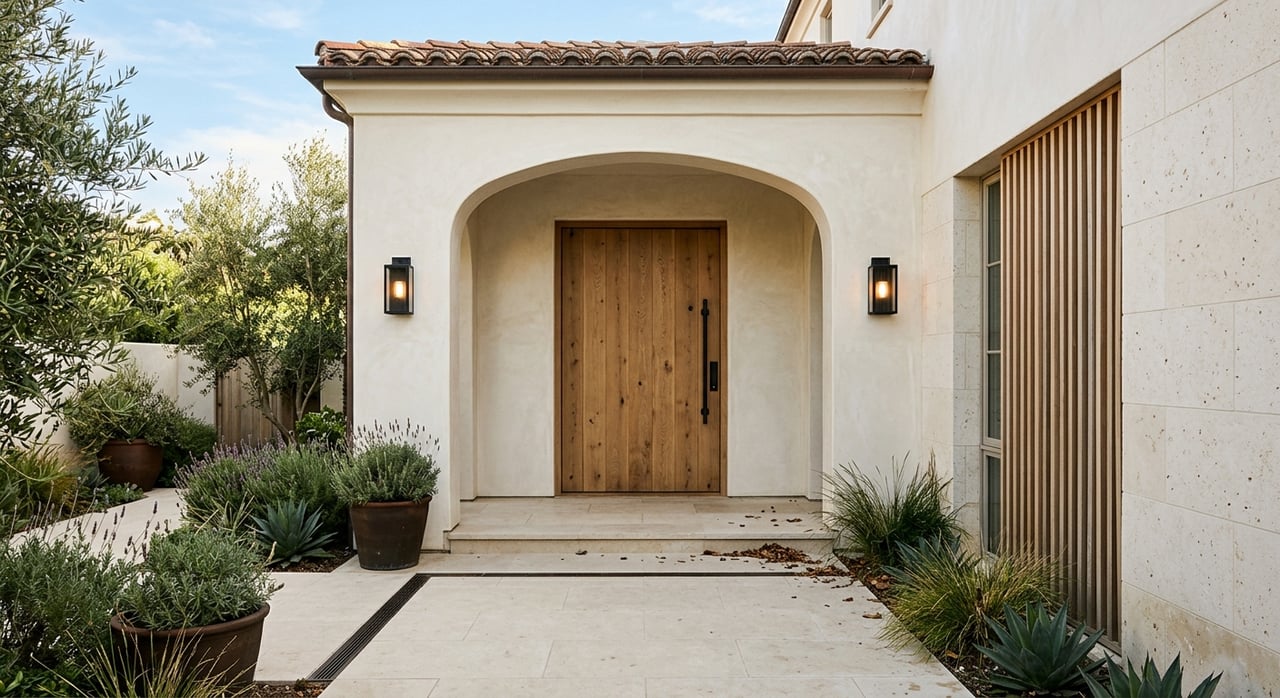
One of the most recognizable architectural languages in Pacific Palisades is Mediterranean and Spanish Colonial Revival. This style has deep roots in the neighborhood’s early luxury identity, especially in places like The Riviera and Castellammare, where European-inspired design was part of the original vision.
In practical terms, you can usually spot this style by a few signature features:
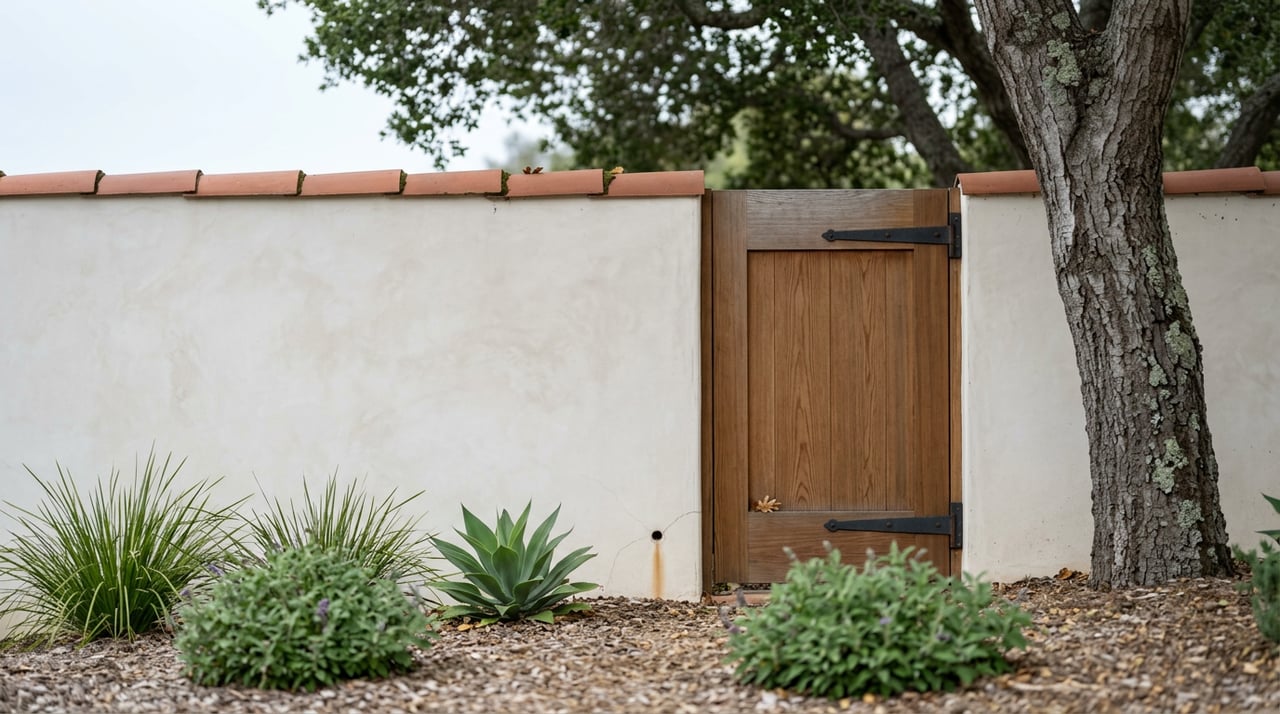
The Bradbury House is one local example cited by the LA Conservancy, with white stucco walls, wood casement windows, and a clay tile roof. Survey work also identifies Spanish Colonial Revival residences on Alma Real and Almoloya, along with the 1929 community church on Via de la Paz.
For many buyers, this style feels established, polished, and visually complete. It often brings a sense of formality and historic presence that stands out on older streets.
Castellammare is especially important when talking about Mediterranean design because it was envisioned from the start as a Mediterranean community with Italian Renaissance architecture. In The Riviera, European-style planning also helped shape the neighborhood’s early identity.
You can also find Spanish Colonial Revival influence in other parts of Pacific Palisades, but it tends to feel strongest in areas where the original planning leaned into that aesthetic. The result is a style that feels tied to the neighborhood’s earliest luxury story.
Another major part of the Pacific Palisades streetscape is the broader group of Traditional or Period Revival homes. In neighborhoods such as Huntington Palisades and The Riviera, many original residences date from the 1920s through the 1950s and include a mix of Period Revival and Ranch styles.
For a buyer, “Traditional” in the Palisades usually does not mean one exact look. It can include Colonial Revival, Tudor Revival, American Foursquare, and other related forms. Survey work documents, for example, an American Foursquare on Chautauqua Boulevard and Tudor Revival examples on Lucca Drive.
This variety is one reason older parts of Pacific Palisades can feel more historically layered than newer or more modern hillside areas. You may see more formal rooflines, more symmetrical facades, and a stronger sense of early suburban planning.
Traditional homes often appeal to buyers who want a classic residential feel. Because this category includes several subtypes, the experience can vary from one property to another, but the broader impression is often one of permanence and neighborhood continuity.
In Pacific Palisades, these homes are closely tied to the community’s earliest tracts. That can make them especially meaningful in areas where the original pattern of development is still visible today.
Pacific Palisades has an unusually strong Ranch story, especially in areas connected to equestrian planning. SurveyLA describes the Riviera Ranch Residential Historic District as a neighborhood of small equestrian ranches with split-rail fences, horse stables, corrals, bridle paths, meandering cul-de-sacs, and no sidewalks.
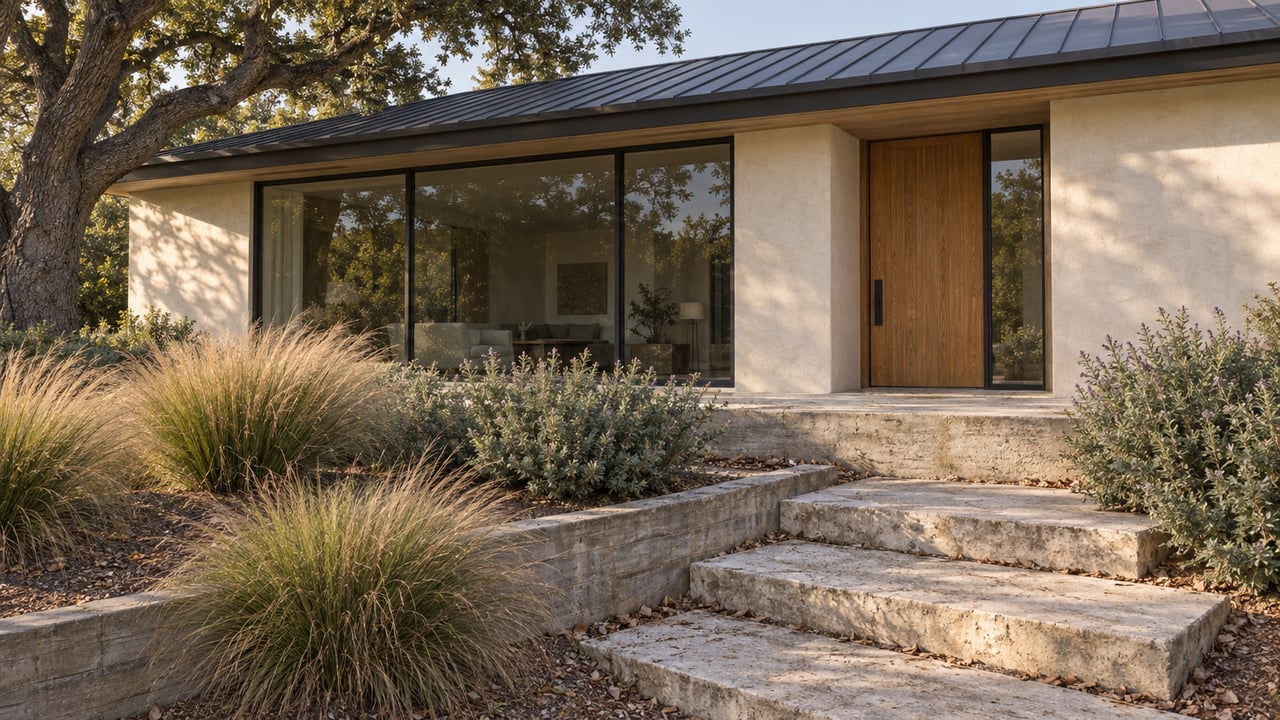
The original residences there were designed in the rustic California Ranch style, and many were designed by Cliff May. These homes are known for low horizontal massing, rambling plans, and wood or stucco cladding.
From a lifestyle standpoint, Ranch homes often read as informal and landscape-oriented. They tend to feel grounded to the site, with more emphasis on outdoor circulation and relaxed living than on formal front-facing presentation.
Ranch homes in Pacific Palisades often stand out for:
In the Palisades, Ranch architecture is not just a style choice. It is part of a broader planning story tied to land use, neighborhood layout, and a distinctly California approach to residential design.
Pacific Palisades is also one of Los Angeles’ key Mid-Century Modern enclaves. SurveyLA notes that many significant Mid-Century Modern houses are located in hillside neighborhoods where they take advantage of sweeping canyon and city views. The area was also the headquarters of the Case Study House program, conceived in 1945.
Some of the best-known local examples have become landmarks in the history of modern architecture. The Eames House and Studio, known as Case Study House #8, is among the city’s most famous Mid-Century Modern buildings. The Entenza House, Case Study House #9, is described as an ocean-view bluff house that merges interior and exterior space.
Other important local modern works include the Thomas Mann House, a California-modern residence by J.R. Davidson, and Ray Kappe’s own Pacific Palisades home in Rustic Canyon, which responds directly to its steep hillside site with large windows and warm wood.
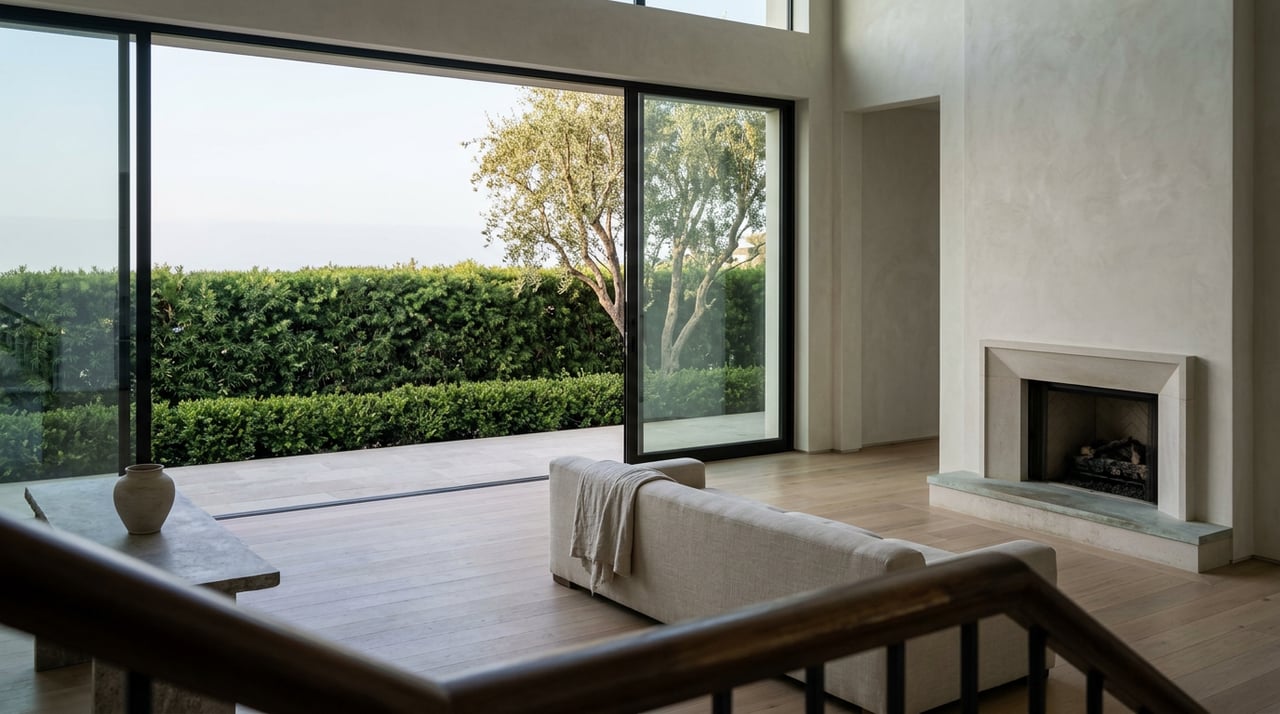
In Pacific Palisades, the Mid-Century look is generally less about ornament and more about proportion, transparency, and site fit. The cited homes point to a design language built around steel frames, glass, modular planning, open interiors, and strong indoor-outdoor connection.
For buyers, that can translate into homes that feel airy, purposeful, and visually tied to the landscape. In a market where views and setting matter, that site response is a major part of the appeal.
While Pacific Palisades is never limited to one architectural identity, some areas do have stronger stylistic patterns than others.
Huntington Palisades and The Riviera are especially useful for understanding the neighborhood’s earlier layers. Both are early automobile-era planning districts with homes dating from the 1920s through the 1950s, and both combine Period Revival and Ranch styles.
Castellammare leans more overtly Mediterranean, reflecting the way it was originally envisioned. Santa Monica Canyon and Rustic Canyon are more topographically irregular, with meandering road patterns that follow the land. Survey work in those canyon areas also notes rustic cabins, Craftsman bungalows, the Spanish Colonial Revival Uplifters clubhouse, and a later concentration of modern hillside homes.
The historic center around Sunset Boulevard and Via de la Paz is different again. There, the defining feature is less one signature style and more a mixed older fabric shaped by the original community plan and later infill.
Architecture influences more than curb appeal. In Pacific Palisades, style often shapes how a home feels before you even step inside.
Mediterranean and Spanish Colonial homes tend to read as more ornamented and visually finished. Ranch homes often feel more casual and adaptable. Mid-Century homes usually carry the strongest design pedigree, while later contemporary and late-modern homes may feel less tied to one historic script.
That difference can matter if you are deciding what kind of living experience you want. Some buyers are drawn to formal detail and historic character, while others prioritize openness, site response, and a cleaner architectural line.
The home’s style can also shape how it presents visually over time. Stucco, clay tile, arches, courtyards, and decorative detailing tell a different upkeep story than a low-slung Ranch house or a glass-forward modern design.
In Pacific Palisades, where hillside lots and view sites are part of the appeal, buyers often respond not just to square footage but to silhouette, setting, and how naturally a house fits its lot. That is one reason architecture remains such an important part of value perception in this market.
If there is one idea that ties Pacific Palisades architecture together, it is the land itself. The neighborhood’s bluffs, canyons, and mesas helped produce Mediterranean luxury enclaves, equestrian Ranch districts, and view-driven Mid-Century homes.
That is why two beautiful homes in the Palisades can feel completely different and still both feel right for the neighborhood. The architecture here is not random. It reflects the setting, the era of development, and the planning ideas that shaped each pocket of the community.
When you understand those patterns, you can evaluate homes with more context and more confidence. Whether you are buying, selling, or simply trying to understand what makes Pacific Palisades distinct, architecture offers one of the clearest windows into the neighborhood’s identity.
If you want insight into how architectural style, location, and market positioning come together in Pacific Palisades, The Cilic Group can help you evaluate opportunities with local precision and discretion.

Looking for the best real estate agent in Pacific Palisades? Joe Cilic of The Cilic Group has led Sotheby's #1 Palisades team for 7 straight years, with over $170M in … Read more


At The Cilic Group, we blend our love for real estate with a commitment to community. Partner with us to achieve your real estate dreams and make a lasting difference together.
15140 W Sunset Blvd Pacific Palisades CA 90272 Joe Cilic | CA DRE# 01421044